
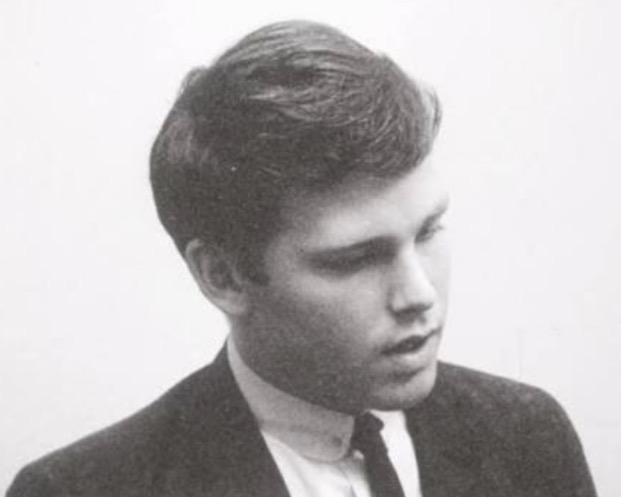
Amidst the persistent haze of the “anything goes”, hedonistic swinging 60s, a culture of excess and casual debauchery, it was easy to lose sight of the fact that James Morrison was suffering, very publicly, from an incurable disease.
Alcoholism.
Even his closest friends and associates, members of The Doors, keyboardist Ray Manzarek, guitarist Robby Krieger, and drummer John Densmore, didn’t recognize at the time that alcohol was slowly killing their friend right before their eyes. Night after night, town after town, against the backdrop of skewed innocence and growing wealth as a result of his Rock N Roll lifestyle, James Morrison was dying.
Years later, when amateur American anthropologist filmmaker Oliver Stone turned his lens upon the Mythology of the Man in the Black leather pants, surviving members of The Doors would work (and ultimately quit their positions) as Special Advisors To The Filmmaker. When Stone began taking liberties with the truth, making stuff up, all three abandoned the project.
In his fictional account of The Doors, director Stone erroneously depicts a clearly flustered Jim Morrison storming out of class because his instructor and fellow students neither liked nor understood his film. Morrison, the highly romanticized lead character in Stone’s epic tale, is presented stereotypically as the rebellious lone wolf protagonist. He quits school and runs off into the sunset of sandy Venice Beach scantily clad teenage girls call home.
The only problem with this scenario is that it is not true. Except the part about Venice Beach and the half naked girls. That came later.
Jim Morrison graduated from George Washington High School in Alexandria, Virginia, in 1961, later earning a bachelor’s degree in theater arts (cinematography/film), graduating with a Bachelor of Arts (B.A.) from UCLA (University of California Los Angeles) in 1965.
Previous to earning his degree at UCLA, Morrison studied at St. Petersburg Junior College in St. Petersburg/Clearwater, Florida, from 1961 until 1962 before transferring to Florida State University in Tallahassee, Florida, in the fall of 1962 before transferring to UCLA.
James Morrison was an intellectual. A thinker and a published poet. He was an enthusiastic student of 19th century French literature, particularly dedicated to the works of then teenage poet Arthur Rimbaud, During his rapid ascent to fame and fortune, Morrison set aside a bit of precious time to compose a humble note of thanks to a devout 60 year old scholar of 19th century French literature.
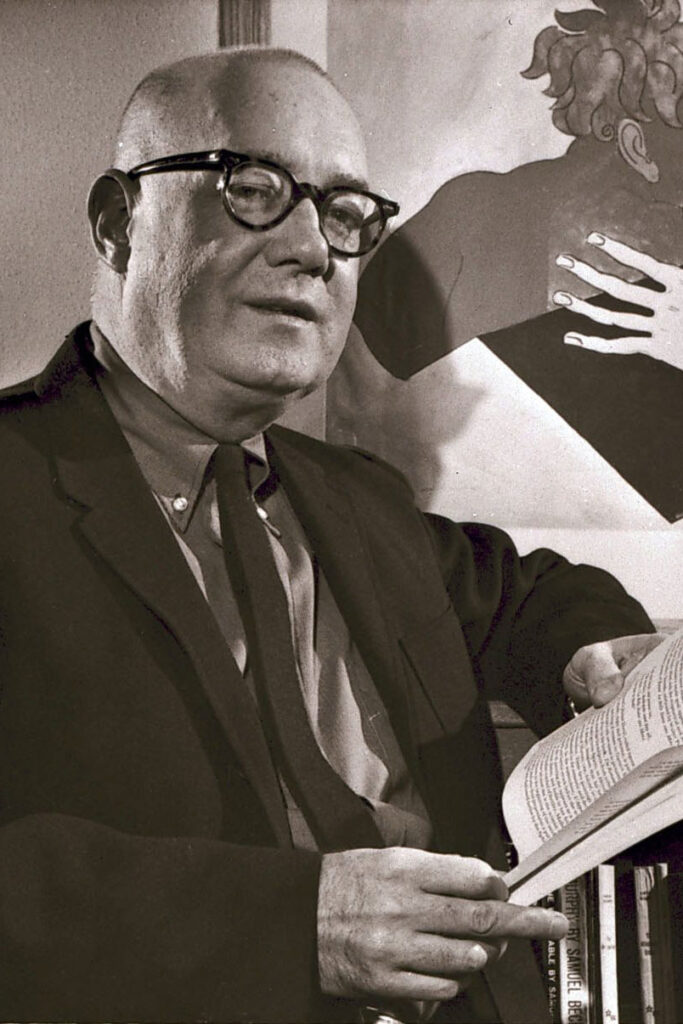
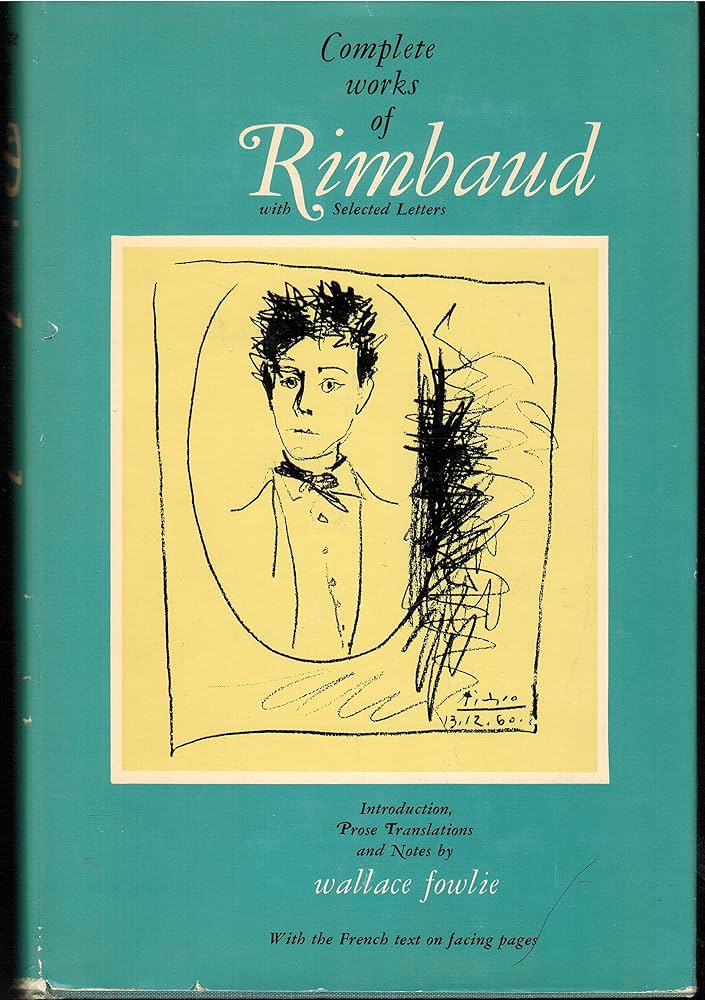
Morrison wrote to Duke University professor Wallace Fowlie (1908-1998) regarding Fowlie’s recent English translation of French teenage poet Arthur Rimbaud’s complete works which Fowlie presented for the first time with Rimbaud’s original French text on facing pages in his 1966 book Complete Works Of Rimbaud with Selected Letters
Morrison thanked Wallace Fowlie, writing:
“I read French but not too easily and I needed your translation. I am a rock singer and your book travels with me wherever I go.”
James Morrison was a visionary futurist. Sixty years ago he predicted the future of popular music, computerized “one man band” electronic music DJ culture that would rely heavily on electronics, tapes, and machines, envisioning:
“one person with a lot of machines, tapes, and electronics set up, singing or speaking and using machines.”
In a 1969 interview with journalist Jerry Hopkins for Rolling Stone magazine, Morrison reflected on the evolution of Rock N Roll.
He noted that traditional rock was “kind of dying out” as artists returned to blues and country roots and theorized that a new generation would emerge combining these roots with a third, electronic component.
His description eerily foreshadowed the rise of solo electronic music producers, DJs, and hip-hop artists who can act as an entire band using a computer or electronic setup.
This exact interview quote was later popularized when electronic artist Skrillex sampled Morrison’s voice in the 2012 Break’n A Sweat collaboration with the surviving members of The Doors.
Tragically, Jim Morrison was also a drunk. A very public drunk. One who drank on the job. Continuously. And it was killing him. Slowly.
And so the dichotomy of the two selves of James Douglas Morrison was born.
Jimbo The Drunk
Vs.
James The Scholar
Janes The Student
James The Poet
James The Intellectual
James The Thinker
James The Man
During his lifetime, Jim Morrison was best known as the charismatic frontman of The Doors, but his true passion was poetry. His published literary output is divided between his lifetime releases and significant posthumous collections.
Lifetime Publications
* The Lords and The New Creatures (1970): Published by Simon & Schuster on April 7, 1970, this was Morrison’s only major, officially distributed volume of poetry during his lifetime. It was a mainstream compilation of two limited-edition, self-published booklets he had printed in 1969: The Lords: Notes on Vision and The New Creatures.
* An American Prayer (1970): Morrison privately printed a small, limited run of this work for distribution among friends and close associates. It did not receive a mainstream publication until after his death.
Posthumous Poetry Collections
Following his death in Paris on July 3, 1971, several major collections were compiled from his extensive notebooks, drawings, and personal writings:
* Wilderness: The Lost Writings of Jim Morrison, Volume I (1988): A bestselling collection featuring previously unpublished poems, notes, and illustrations.
* The American Night: The Lost Writings of Jim Morrison, Volume II (1990): A second volume of poetry and prose compiled from his notebooks.
* The Collected Works of Jim Morrison (2021): A definitive anthology featuring his poetry, song lyrics, and facsimiles of his personal notebooks.
Morrison’s writing style was significantly influenced by 19th-century French poet Arthur Rimbaud and the broader French Symbolist movement, which informed his approach to imagery and verse. Rimbaud scholar Wallace Fowlie, unaware of who Jim Morrison was at the time of receiving his letter in the 1960s, would go on to write the book Rimbaud And Jim Morrison: The Rebel As Poet (1994) when he was 86 years old, four years before his death.
Fowlie’s later book is both a dual memoir and critical study exploring the striking personal and artistic parallels between Arthur Rimbaud and Jim Morrison, examining their shared quest for self-liberation and the derangement of the senses
In May 1970, at the height of his fame and amidst legal controversy regarding charges of indecent exposure (NOTE* 40 years later Florida Governor Charlie Crist requested and received a unanimously granted posthumous pardon from Florida’s State Clemency Board for Jim Morrison, officially reversing Morrison’s September 20, 1971 conviction of Indecent Exposure and Open Profanity. Morrison was sentenced to six months in jail but remained free on bond while appealing the verdict and later moved to Paris where he died 9 months later before his appeal could be finalized). Jim Morrison sat for an interview with Tony Thomas, a British-born former CBC broadcaster who relocated to Los Angeles to write books about the Hollywood film industry.
The interview took place on May 27, 1970, at “The Doors Workshop,” the band’s private office in Los Angeles. At 26 years old, Morrison was considered a notoriously difficult subject, making his participation a significant achievement for CBC Radio. The conversation was later featured on the program Something to Say and has been revisited by programs like Rewind as a rare, thoughtful, and earnest portrait of the artist.
The primary catalyst for the interview was the upcoming release of Morrison’s new book of poetry The Lords and The New Creatures. While CBC Radio aimed to reflect the popular culture of the day through its programming, Thomas successfully steered the conversation beyond Morrison’s “rock star” status. Instead of focusing solely on music, the two discussed Morrison’s poetry, the state of the world, and a “generation in turmoil”, young people who sought to build a world fundamentally different from that of their parents.
The interview remains a poignant record of a cultural icon, captured just over a year before Morrison was found dead in a Paris hotel room on July 3, 1971. Suspiciously, no autopsy was performed and Morrison was hastily buried in the 6th Division of the Père Lachaise Cemetery in Paris, France. Rumours as to the cause of Morrison’s death range from an accidental overdose to foul play and everything in between. Unless his remains are exhumed for autopsy, the world will most likely never know what truly happened that fateful night.
The official record of Morrison’s death allege that he died in the early morning hours of July 3, 1971. His longtime girlfriend, Pamela Courson, stated to police that she discovered his body in the bathtub of their Paris apartment at around 6:00 a.m. on July 3. Accounts suggest he passed away a few hours prior in the early morning. Estimates place the time of death anywhere from 2:00 a.m. to 5:00 a.m. after Morrison had experienced trouble breathing.
If we are to believe Pamela’s version of the events surrounding Jim’s death, she was the only other person present in their apartment when he died. Whatever secrets she may have carried, she took them to the grave with her less than three years later. Pamela Courson died on April 25, 1974, at the age of 27. She passed away from a heroin overdose in a Los Angeles apartment, roughly three years after Jim Morrison’s death in Paris on July 3, 1971. Like Morrison, she was 27 years old when she died.
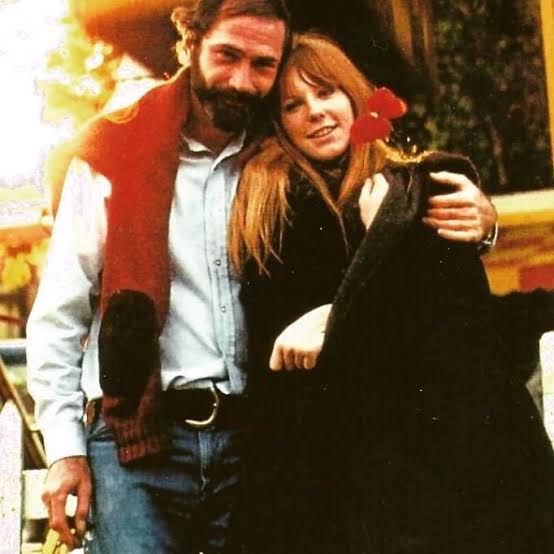
June 28, 1971, Alain Ronay and Pamela Courson photographed by Jim Morrison on the trio’s day trip to the French countryside in Saint-Leu-d’Esserent
Courson began using heroin sometime in the late 1960s during her turbulent relationship with Jim Morrison. Morrison’s biographers often note that he strongly disapproved of the drug and frequently argued with Courson about her using it. Courson’s addiction to the drug was heavily tied to her relationship with French nobleman and prominent heroine dealer Jean de Breteuil who she had been romantically involved with for many years since her days in college.
After his father’s death in 1960, 11 year old Jean de Breteuil succeeded his father as the Count of le Tonnelier de Breteuillof. In 1967, at the age of 17, Breteuil travelled to America and enrolled at the University of California, Los Angeles (UCLA). At the time he frequented the L.A. club The London Fog where The Doors played regularly. Soon he would meet and became a boyfriend of Pamela Courson, who was also seeing Jim Morrison at the time.
While attending UCLA Jean de Breteuil was supplied with hashish and opium in diplomatic bags by a Moroccan chauffeur attached to the French Consulate, which he dealt to Pamela Courson and many other of his fellow students at UCLA. During this time Jean took Courson on several trips to France, Italy, and Morocco to purchase clothes for her fashion boutique Themis. He often used these overseas excursions with Pamela as a ruse to procure more drugs to sell. For his part, Morrison did not enjoy Jean’s company, negatively referencing him in the song Love Street. Not long after he began seeing Courson, Breteuil was supplying uncut Chinese heroin to her and others, frequently running off with her through 1970 to his villa in Marrakesh, North Africa. By summer 1970, Jean was no longer enrolled at UCLA and thus in the United States illegally, making heroin dealing his primary employment.
It has long been rumoured that de Breteuil supplied Janis Joplin with the heroin which killed her on October 4, 1970. Shortly after Joplin’s death he and Pamela fled the United States together to Paris where she stayed with him until December 1970. On Valentine’s Day 1971, with Morrison wrapping up loose ends with The Doors finalizing their forthcoming album LA Woman, he asked Pam to travel to Paris ahead of him to arrange for suitable accommodations for them before his arrival later in the Spring of 1971. In 1971 Breteuil travelled alone to England, where he took up residence with Keith Richards in London, supplying the Rolling Stones guitarist with drugs. It was at this time that de Breteuil met singer Marianne Faithful who became both his girlfriend and a steady customer for his supply of drugs.
In mid 1971 Breteuil visited the Rolling Stones while they were recording Exile On Main Street at Villa Nellcôte in the South of France. He was there on business, to initiate an uninterrupted supply of heroine to the band and their guests for the duration of their stay at the villa. The Stones’ time at Villa Nellcôte in 1971 is the stuff of absolute rock-and-roll legend. Fleeing Great Britain due to an excessive rate of taxation on their music earnings, the band became tax exiles in the South of France. Keith Richards rented the Villa Nellcôte, a magnificent, 16-bedroom Belle Époque mansion in Ville franche-sur-Mer, which quickly transformed into a chaotic, drug fuelled 24-hour rock n roll star commune.
Oddly enough, during World War II, the villa had served as a local headquarters for the Nazi Gestapo. Very quickly the atmosphere during these sessions descended into chaos with its mixture of dark history, intense heat, and absolute lawlessness. Nellcôte became an open door paradise for an entourage of musicians, celebrities and drug dealers like Breteuil. Country rock pioneer Gram Parsons stayed at the villa for weeks, keeping up with Richards doing heroine, ultimately influencing the Americana country direction the album would take.
The villa consumed vast amounts of expensive food, alcohol, and drugs daily, paid for entirely by the band, but the utopian chaos couldn’t last forever. The local French population and police grew highly suspicious of the non-stop rock star lifestyle. In the middle of the summer, professional thieves slipped into the villa and stole most of Keith Richards’ favorite guitars right out of the living room while everyone was asleep or passed out. By the end of August 1971, French police were actively investigating the villa for drug trafficking. Realizing a massive drug bust was imminent, the Rolling Stones abruptly packed up their tapes and fled to Los Angeles in late 1971 to finish the overdubs and mixing at Sunset Sound. Keith Richards was later convicted in absentia by a French court for cannabis trafficking.
Earlier that fateful summer of 1971, prior to the Stones vacating their paradise villa in the south of France, Breteuil was back in Paris living with his then girlfriend Marianne Faithfull. It is alleged that at this time Breteuil supplied Jim Morrison with a fatal dose of heroin. One account details Breteuil accompanying Courson to her and Morrison’s apartment, where they discovered Morrison on the verge of death. Courson never mentioned Jean’s presence to investigators, possibly to protect the known drug dealer from the authorities, but longtime Morrison friend Alain Ronay, who assisted at the scene of Morrison’s death, has stated unequivocally that Jean de Breteuil was present.
Alain Ronay was a French-American photographer and filmmaker best known for being one of Jim Morrison’s closest friends. He is a pivotal figure in the history of The Doors because he spent the final days with Morrison in Paris, took the last known photographs of the legendary singer, and played a central role in the events surrounding Morrison’s death and burial. Ronay met Morrison and keyboardist Ray Manzarek at UCLA film school in 1964, long before the band achieved global fame.
When Morrison moved to Paris with his Pamela Courson in 1971, Ronay became his closest companion in the city. He spent July 2, 1971, the day before Morrison died, walking around Paris with the singer, later noting that Morrison, appearing tired and unwell, pleaded with him to stay and not leave him for a previous engagement. Just days before Morrison’s passing, on June 28, 1971, Ronay accompanied Pamela and Jim on a day trip to the French countryside in Saint-Leu-d’Esserent, where he captured the final known photographs of a relaxed, smiling Jim Morrison.
When Pamela Courson found Morrison unresponsive in their apartment bathtub on the morning of July 3, 1971, she contacted Ronay because she could not speak French. Ronay called the Paris Fire Department emergency line and rushed to the scene. He was among the first people to see Morrison’s body and was vital in handling the administrative logistics with French authorities and helping secure Morrison’s final resting place at the Père Lachaise Cemetery. For two decades, Ronay maintained strict silence regarding the tragic events of that day. He finally broke his silence in 1991 to publish a detailed account titled “Jim and I: Friends Until Death,” seeking to defend his friend’s memory against constant media speculation.
Regardless of Jean de Breteuil’s involvement in Morrison’s death, he and girlfriend Marianne Faithfull fled Paris immediately following Morrison’s death, traveling to Marrakesh, Morocco, North Africa. Less than a year later, on June 25, 1972, Breteuil too would be dead, of a heroine overdose in Marrakesh. Less than two years later, on April 25, 1974, Pamela Courson would be dead as well, the result of a heroine overdose.
Jim Morrison was buried hastily within days of his death. The burial took place in the morning of July 7, 1971. The proceedings were kept very quiet to avoid a media circus, lasting only about eight to ten minutes with no religious service or minister present. Aside from cemetery workers and undertakers, only five people attended:
Pamela Courson, Morrison’s companion and partner.
Bill Siddons, Manager of The Doors.
Agnès Varda, Belgian born film director and friend of the couple.
Alain Ronay, Photographer and friend who had studied with Morrison at UCLA.
Robin Wertle, Morrison’s French Canadien Parisian secretary.
Of the five people present for Jim Morrison’s burial, only one remains alive today. As of this writing, 78 year old former Doors manager Bill Siddons is still living.
Morrison On Morrison – click either link below to listen now
https://thedukesofatmosphere.podbean.com/e/116-james-not-jimbo-morrison/
Morrison On Morrison – click link below to listen for free on Apple Podcasts
Morrison On Morrison – click link below to listen for free on Amazon Music