
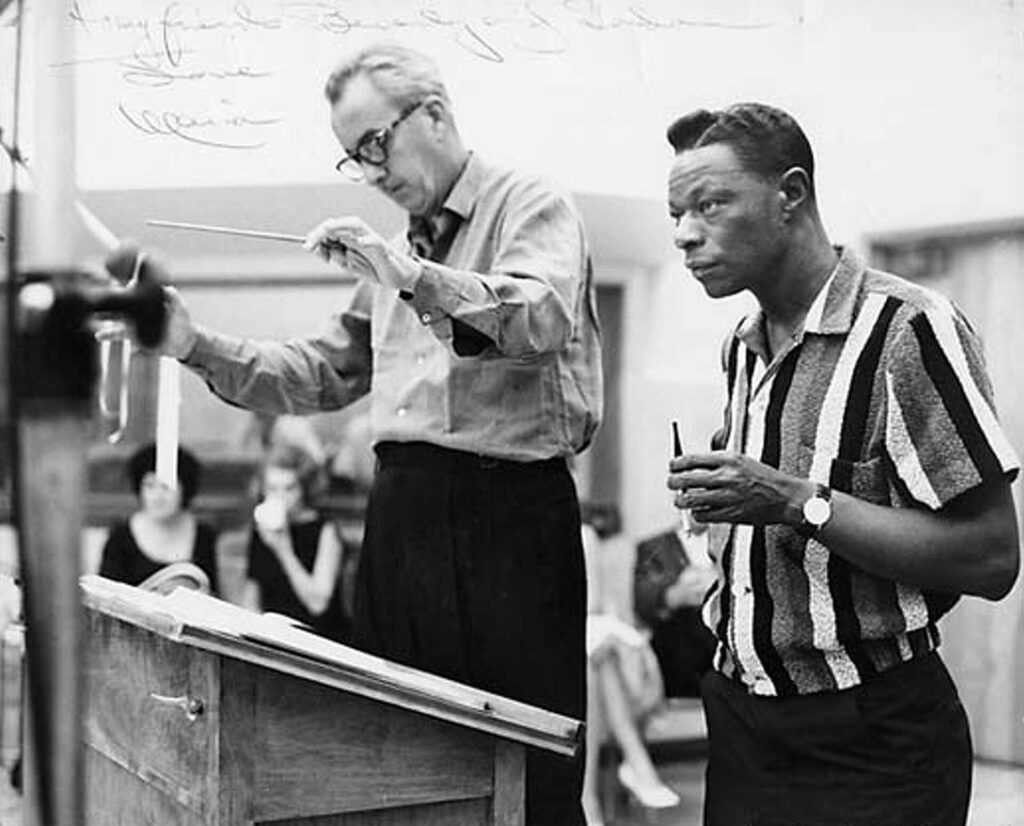
The Genius of Cole/Jenkins: A Timeless Collaboration
In the lush arena of mid-century American music, few partnerships resonate with depth and significance like the collaboration between arranger Gordon Jenkins and legendary vocalist Nat King Cole. Their four-album legacy, highlighted by their definitive 1963 album Where Did Everyone Go?, released a year and a half prior to Coles tragic death at 45, remains an artistic pinnacle yet to be surpassed. Both Jenkins and Cole, each Titans in their own right, came together at the absolute peak of their powers, crafting an enduring sound that continues to captivate audiences, transcending generations and genres.
Born on May 12, 1910, in the outskirts of St. Louis, Gordon Jenkins was immersed in a world of music from an early age. His father, an organist at a local movie theater, introduced him to the keyboard, igniting a passion that would propel Jenkins into the forefront of jazz and popular music in the following decades.
Early gigs at radio stations saw Jenkins honing his craft, learning multiple instruments, and writing arrangements that would later define his distinctive sound, a style characterized by lush strings and intricate harmonies.
Jenkins’s artistic journey took a significant leap in his mid-twenties when he began arranging for Isham Jones, one of the foremost dance band leaders of the era. With Jones’s group featuring a plethora of notable vocalists and musicians, Jenkins seized the opportunity to showcase his talents, crafting sophisticated charts that emphasized the band’s diverse capabilities. By the late 1930s, Jenkins had relocated to Los Angeles, where he found himself in high demand, adeptly juggling roles in film and radio while also becoming the musical director for Decca Records.
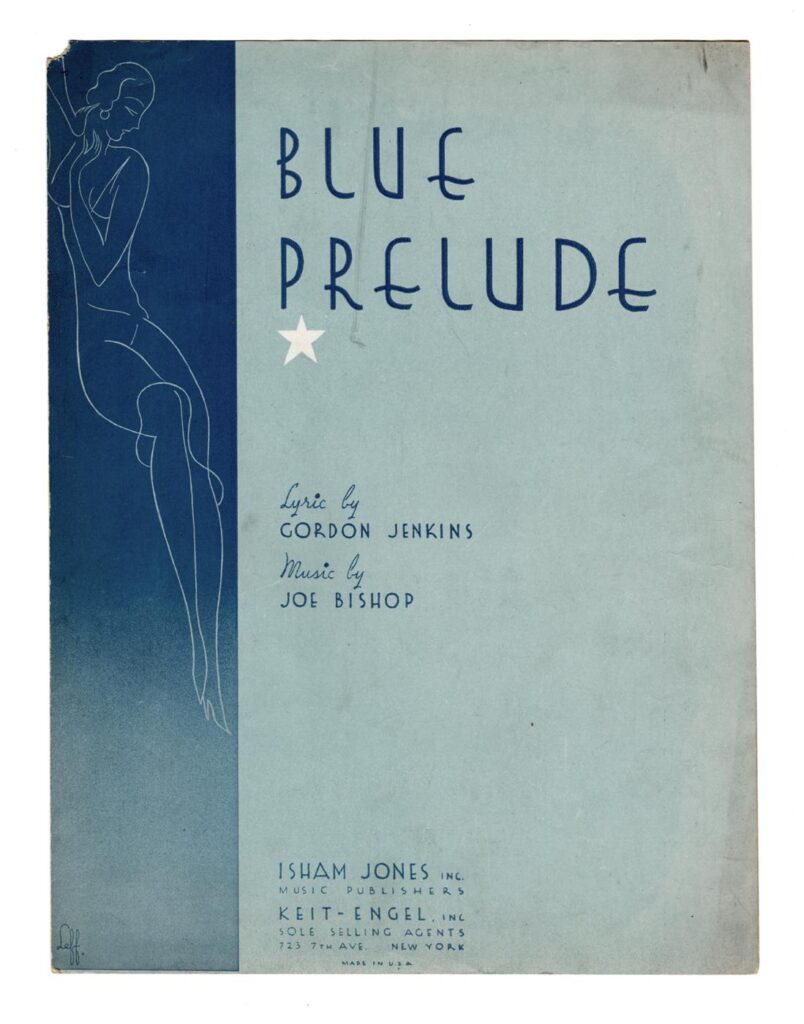
Sheet music co-written by Gordon Jenkins for Isham Jones
During the mid 1940s, Jenkins’s star continued to rise as he collaborated with jazz icons Louis Armstrong, Ella Fitzgerald, and Billie Holiday. His arrangements became a powerful force in shaping their vocal performances, allowing their artistry to shine through a secure vessel.
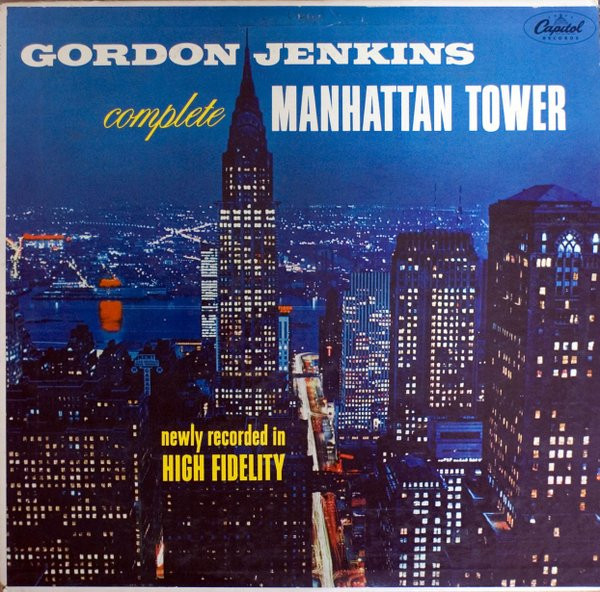
A landmark project from this period was Jenkins’s masterful Manhattan Tower LP, a groundbreaking work released in 1946 that melded music with spoken word and sound effects. This ambitious project, exploring a young person’s first trip to New York City, foreshadowed the concept albums that would follow in later years. Its innovative spirit was immediate, even earning Jenkins a key to New York City after a notable live performance in Manhattan on The Ed Sullivan Show.
Jenkins’s musical vision is further illuminated by his early support of Pete Seeger and the Weavers, a group struggling in New York City before Jenkins caught wind of their potential. Recognizing their unique sound, he brought them to Decca Records, resulting in a meteoric rise to fame with Jenkins arranging their million selling, Number 1 hit song, “Goodnight Irene.” This seamless blend of folk elements with Jenkins’s orchestral finesse encapsulated the essence of American music during that era, leaving an indelible mark.
As the 1950s ushered in a new golden age of entertainment, Jenkins became a fixture in hotspots like Las Vegas and the vibrant nightlife of New York City. His collaboration with Capitol Records would yield some of his most acclaimed work, particularly with Nat King Cole.
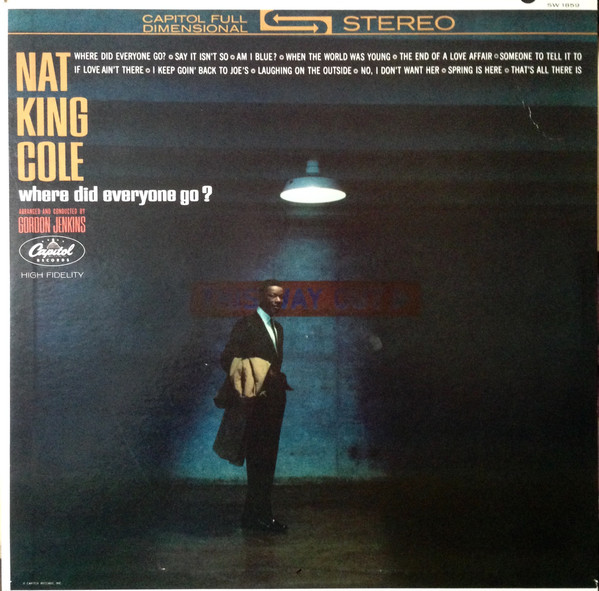
Where Did Everyone Go? (1963) ~ the final Cole/Jenkins collaboration, 18 months before Cole’s tragic death at 45 in 1965
Jenkins’ partnership with Cole was cemented in 1957 with the release of their Love Is The Thing album, a collection that exemplified the seamless artistic synergy between Jenkins and Cole. It was the first of four records the two would do together. These four records, Love Is The Thing (1957), The Very Thought Of You (1958), Every Time I Feel The Spirit (1959) and Where Did Everyone Go? (1963) are widely regarded as among the very best work of either man’s career. Jenkins’s arranging style was a perfect match for the restrained brilliance of Cole’s vocals. Some of the cuts from these four albums, notably When I Fall in Love, Spring Is Here and Stardust, approach definitive brilliance.
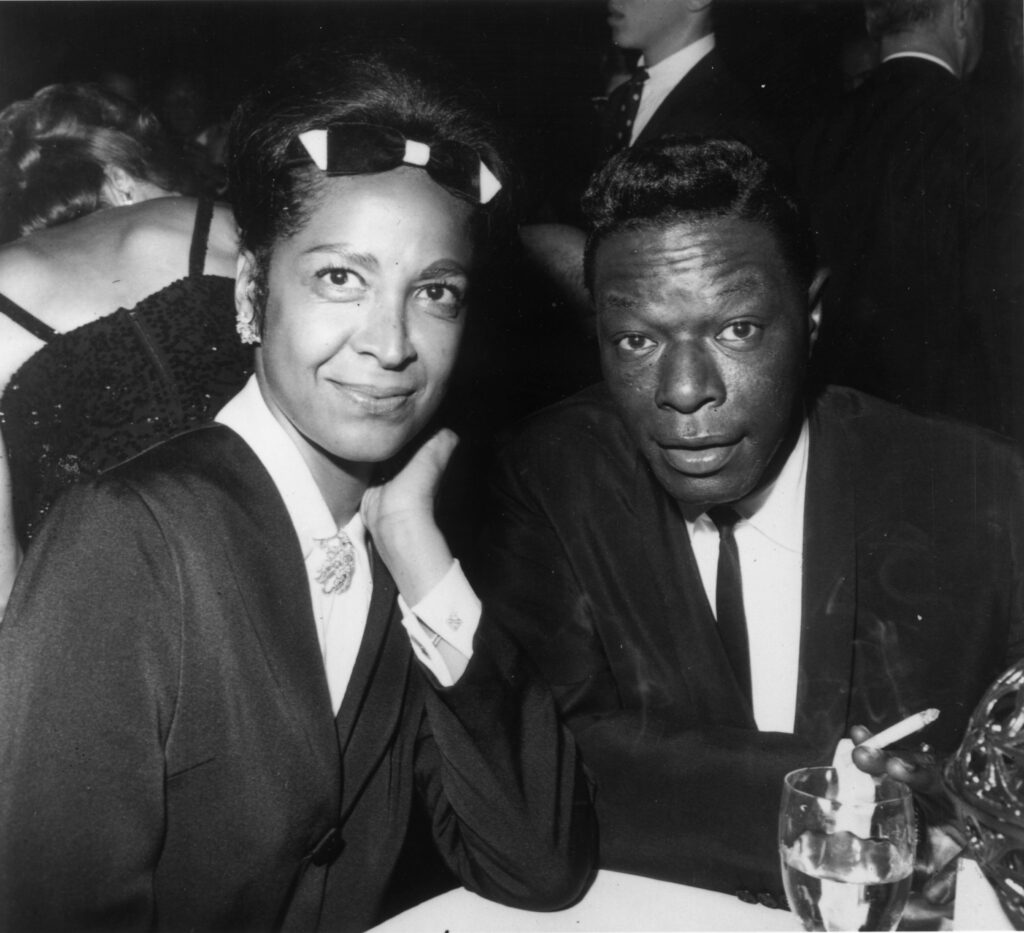
Maria Cole & her husband Nat “King” Cole
Maria Cole, Nat’s wife, observed the magic of their collaboration, noting:
“Gordon was the only person who could do those things with strings, to really embellish what Nat was doing on ballads, the only person Nat worked with where he was totally at ease. The arrangements were just there, perfect, and you can hear it in the records. I always felt Gordon had in his music what Nat had in his voice, and they really were wedded.”
– Maria Cole, American jazz singer, veteran of both the Duke Ellington and Count Basie bands, wife of Nat King Cole and mother of nine time Grammy award winning singer Natalie Cole
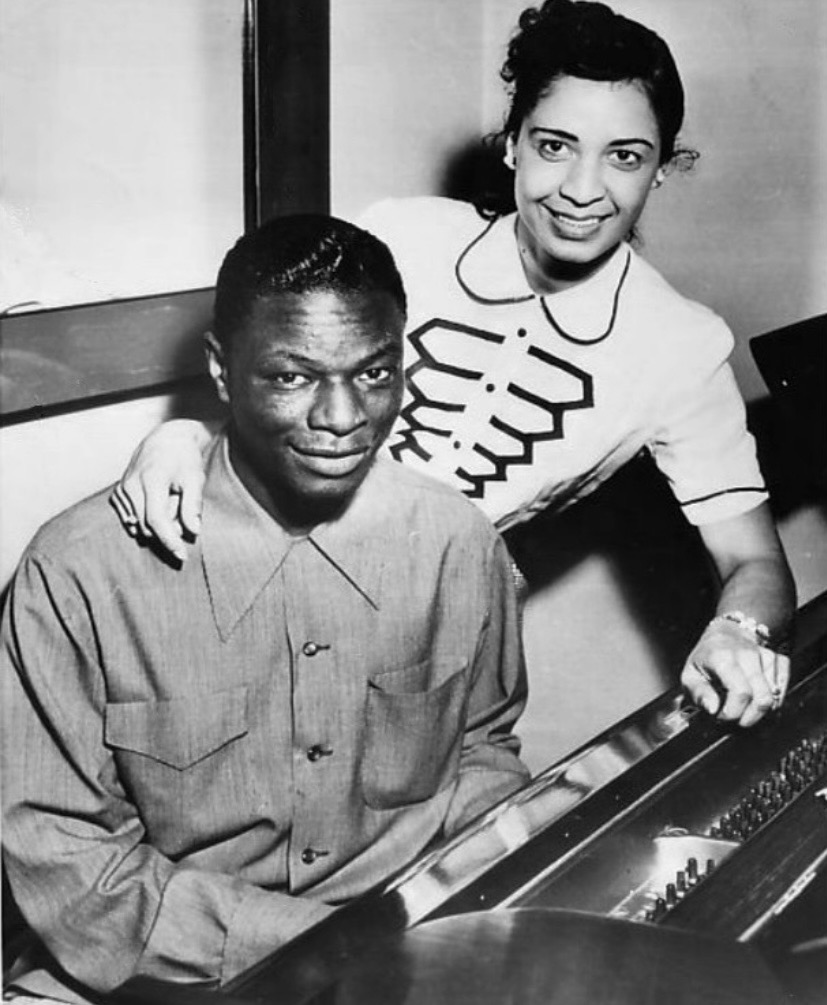
Nat “King” Cole with wife Maria Cole
Her insight underscores the profound bond between the two artists, where Jenkins’s arrangements felt simultaneously supportive and transformative, allowing Cole’s voice to soar with unprecedented beauty.
But Jenkins’s talents were not confined to just Cole. His innovative approach also caught Frank Sinatra’s attention. Together they created several albums, including the pivotal Where Are You? (1957) and No One Cares (1959) both of which showcased a darker, more introspective side of Sinatra’s artistry. The emotional depth of these collaborations would become synonymous with the era, demonstrating Jenkins’s ability to match his arranging style to an artists ever evolving interpretation of a particular piece.
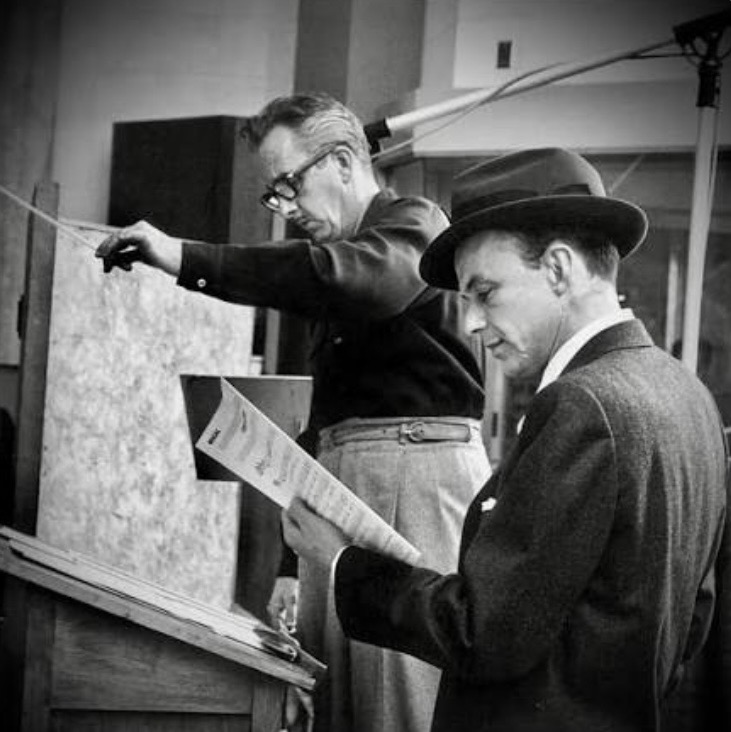
Gordon Jenkins working with Frank Sinatra
Despite the changing musical landscape of the 1960s, Jenkins found ways to adapt, earning a Grammy for his work on Sinatra’s September of My Years album from 1965.
He even ventured into uncharted territory in the 1970s collaborating with Harry Nilsson on one of the first pop interpretations of the Great American Songbook through A Little Touch of Schmilsson in the Night, a project that presaged the resurgence of standards in popular music.
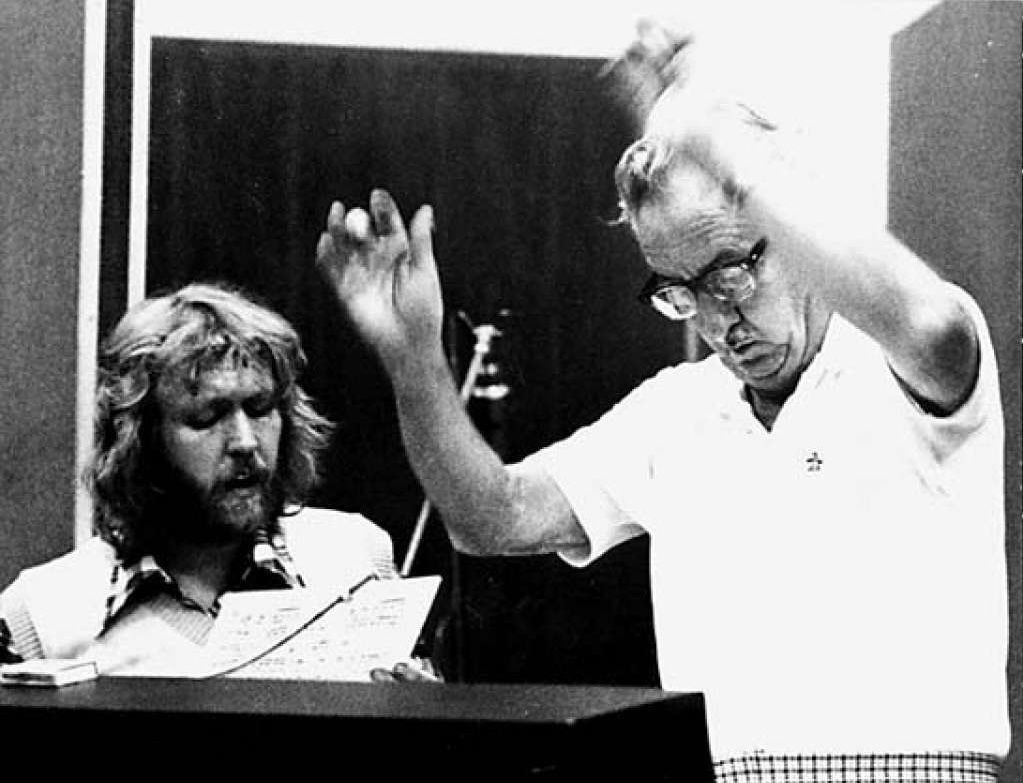
Harry Nilsson & arranger Gordon Jenkins 1973
As Jenkins aged, he continued to innovate and inspire. Shortly after Jenkins completed work on Frank Sinatra’s critically acclaimed 1981 album She Shot Me Down he was diagnosed with ALS. Despite the physical challenges that ensued, including a severe car accident in 1981 that left him incapacitated, his creative spirit remained unbroken. He continued to jot down his thoughts and reflections every day until his death on May 1, 1984.
Ultimately, Gordon Jenkins was much more than simply an arranger; he was an architect of sound who shaped the landscape of mid-century jazz and popular music. His collaborations with icons like Nat King Cole and Frank Sinatra not only highlight his exquisite talent but also showcase his unparalleled ability to craft arrangements that complemented the emotional weight of a vocalist’s performance. As Jenkins’s son Bruce aptly summarized in his father’s biography, Goodbye: In Search of Gordon Jenkins, it is crucial to recognize how Jenkins, despite often standing in the shadows of his more famous collaborators, had an undeniable influence that helped define an era.
Today, the four albums produced in partnership between Cole and Jenkins not only exist as highlights of their respective careers but as living testimonials to artistic greatness. Their work together exemplifies a synergy rarely replicated, ensuring their contributions to the field of music remain cherished and celebrated. The genius of Cole and Jenkins continues to echo through time, a collaboration that set an artistic standard unparalleled to this day.